ReNATE – Biological Radionuclide Removal Using Natural Association Processes: Technical Development
The ReNATE collaborative project began in October 2025 and is funded for three years under the BMFTR’s FORKA program. In addition to the VKTA, the Helmholtz-Zentrum Dresden-Rossendorf e. V., Leibniz University Hannover, and Technisches Ingenieurbüro Krüger are also participating.
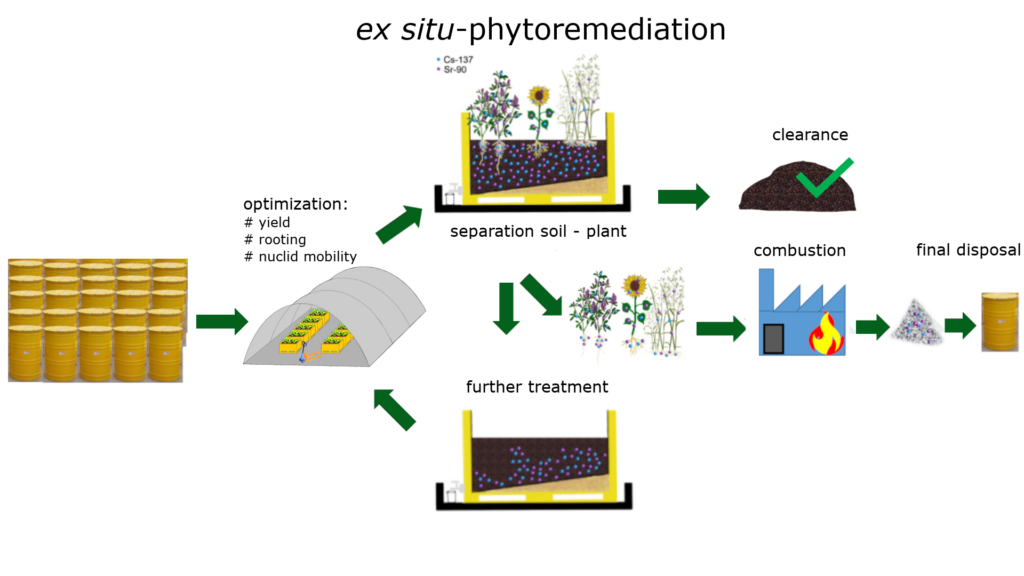
The goal of the project is to develop a biological process for the ex situ remediation of radionuclide-contaminated soil using plants. Building on the biogeochemical findings of the predecessor project RENA, this biological remediation process is intended to become even faster, more efficient, and more technically feasible. To this end, key factors influencing plant growth and the removal of contaminants – such as soil type, plant selection, fertilizer use, or the chemistry of the substrate – are being investigated. The data collected will allow for an assessment of how well the method can be applied to other contaminated soils.
The project aims to result in a comprehensive concept that not only describes soil remediation but also outlines how the resulting contaminated plant biomass can be safely disposed of – in a way that is both practically feasible and economically viable.

Förderkennzeichen 15S9454B
Contact person:
Dr. Manja Vogel
Dr. Henry Lösch